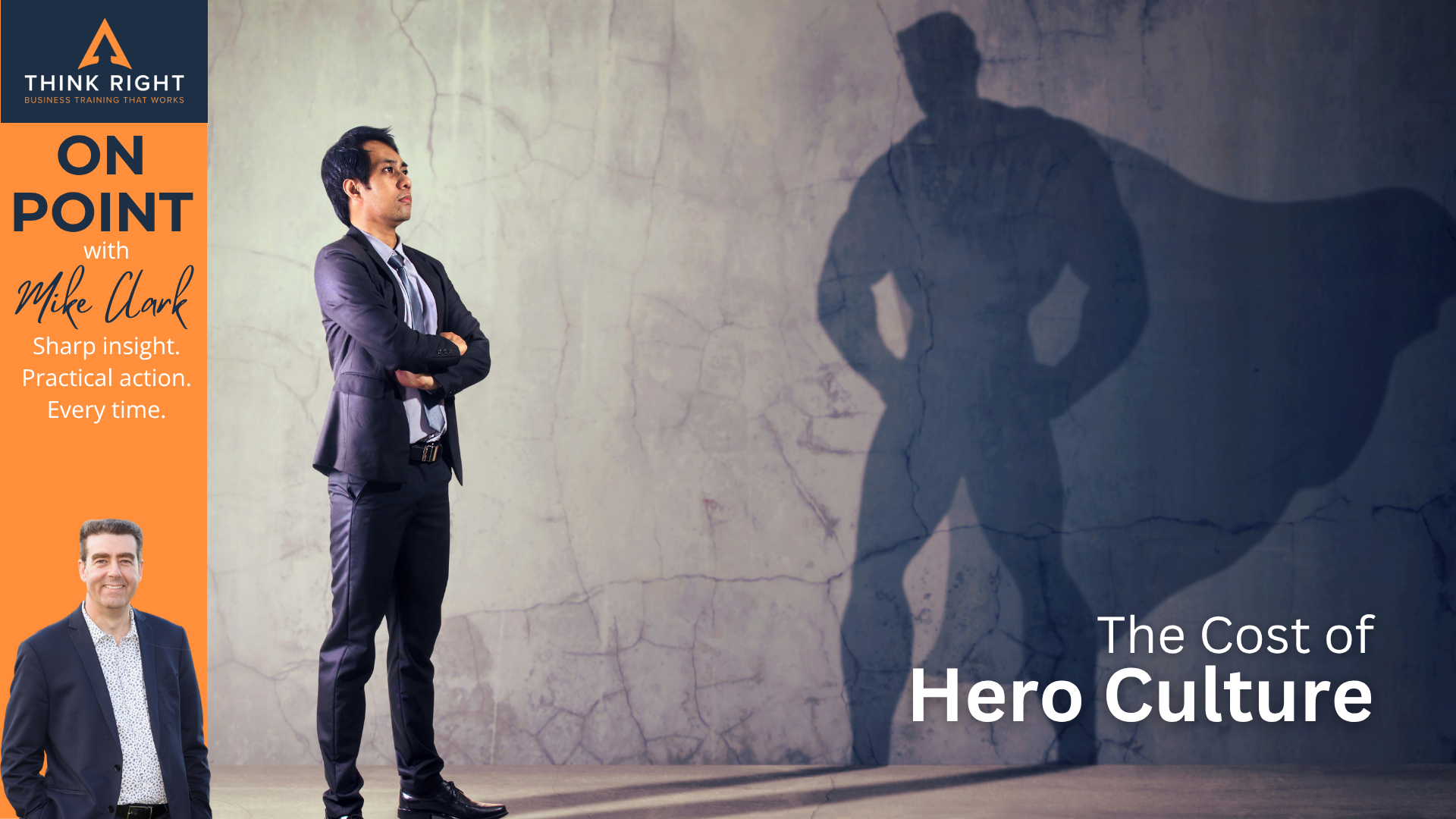
A hero can be incredibly valuable in a business, but a hero culture can become very expensive.
Many small businesses grow around one or two star players. They know the clients, the systems, the shortcuts, the risks, and the decisions that need to be made. They can rescue a situation, push something through, fix a problem, or make sure the result is delivered.
In the short term, that can feel like a gift.
The risk is that, over time, the business becomes completely reliant on those people. They hold the knowledge, carry the pressure, and keep things moving. That creates single-person dependency.
Single-person dependency is what happens when one person does something so exceptionally well that nobody else is trained to do it. They are relied on completely, and eventually they become the bottleneck because nothing can happen without them.
That creates two risks.
The first is that ownership weakens around them. When one person keeps saving the day, others can begin to realise they do not need to carry their full share. Standards can slip because everyone knows somebody else will rescue the situation if it starts to go wrong.
The second is that the hero becomes overloaded. They are often too busy saving the day to train other people, document what they are doing, or build a simple process around the task. Over time, they may also become resentful if they are constantly tidying up after others.
If that person leaves, becomes unavailable, or burns out, the business can suddenly discover how much knowledge and capability was sitting in one person’s head.
The answer is not to criticise high performers. A business should value people who bring excellence, commitment, and ownership to their work. The issue is whether the business is learning from them, or simply depending on them.
As a business grows, it needs to move from being purely people-driven to becoming more process-driven. In a people-driven business, performance often depends on head knowledge. In a process-driven business, that knowledge becomes clear enough for others to be trained. People know what needs to happen, when it needs to happen, and what good performance looks like.
That does not remove the value of good people. It makes their value more transferable. The goal is not to make the high performer less important, but to make the business less fragile.
Start by identifying one area where the business is still relying on one person to save the day. What needs to happen? What decisions are they making? What does good performance look like? Who else needs to be trained so the result can be repeated?
Heroes can help a business grow, but hero culture can hold it back. Sustainable performance is built when capability is shared, processes are clear, and the business is not dependent on one person saving the day.