When Good Systems Become Heavy
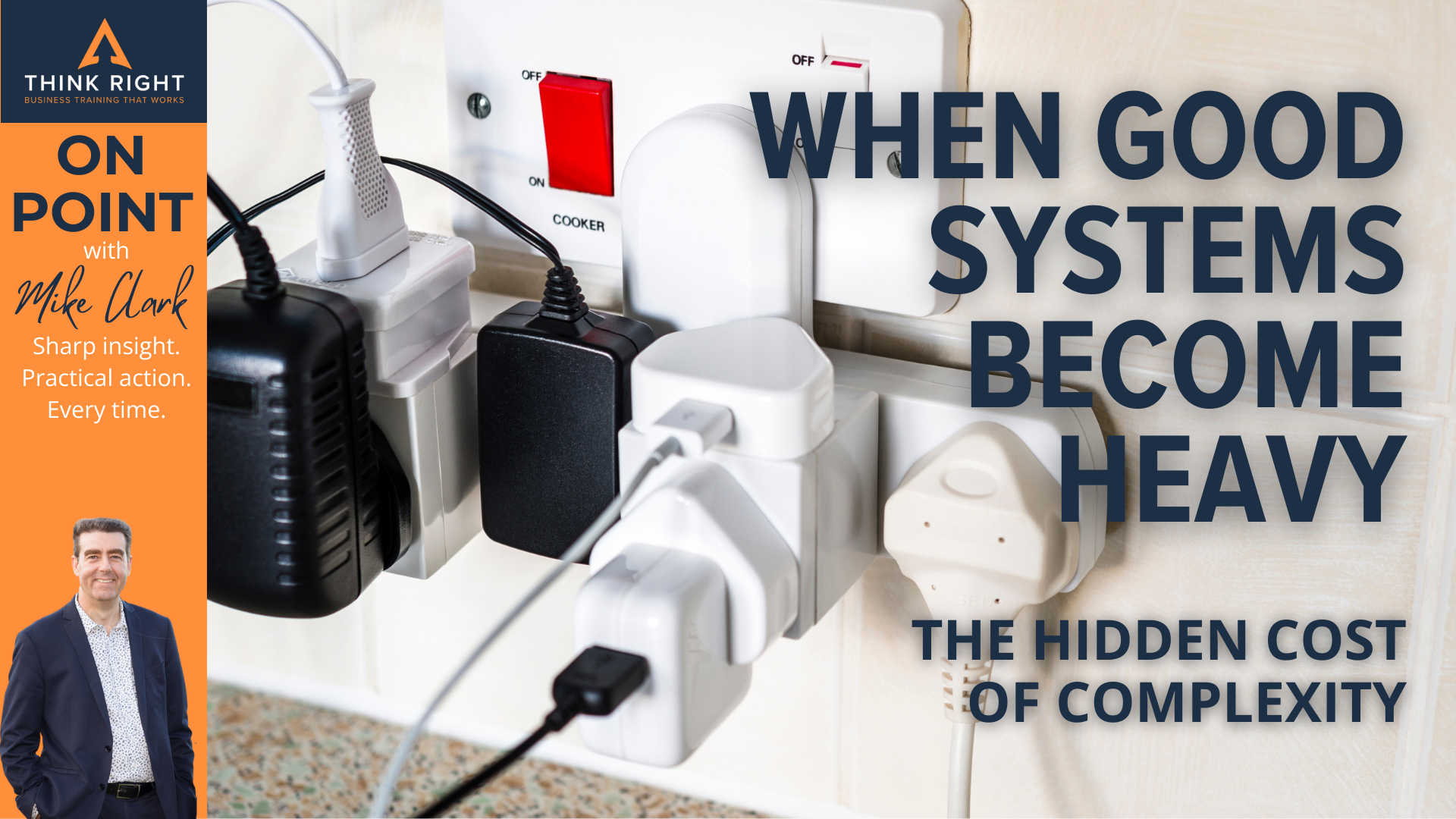
I was sitting with a leadership team not long ago going through their monthly reporting.
Great business. Good people. Solid growth.
The reporting pack was detailed. Every page had been built for a reason.
Halfway through I stopped and asked,
“Which of these do you actually use?”
Silence.
Not because they didn’t know their business. They did.
They cared. They had built all of this to stay on top of things. To avoid surprises. To keep standards high.
But over time the system had grown heavier than the work itself.
I see this often.
A new approval step gets added after a mistake.
A new report appears after a surprise.
A new tool comes in to tighten things up.
Each one makes sense.
No one sets out to complicate their business.
But layer enough well-intended fixes on top of each other and something changes.
You can feel it.
Good people spend more time checking processes than serving customers.
Energy goes into maintaining the system instead of building momentum.
Decisions take longer because no one wants to miss a step.
The business still runs.
But it feels slower.
Peter Drucker said, “There is nothing so useless as doing efficiently that which should not be done at all.”
Complexity rarely looks messy.
It looks organised.
It looks controlled.
It looks responsible.
But if you’re honest, you know when it’s asking more of your people than it should.
The strongest businesses I work with aren’t the ones with the most systems.
They’re the ones with systems simple enough to use under pressure.
Clear ownership.
Clear measures.
Clear decisions.
Nothing fancy. Just workable.
Leadership isn’t just about building structure.
It’s about being willing to remove what no longer helps — even if you were the one who put it there.
This week, look at one process in your business.
If you were starting fresh today, would you build it the same way?
If not, change it.