When Everything Is A Priority, Nothing Moves
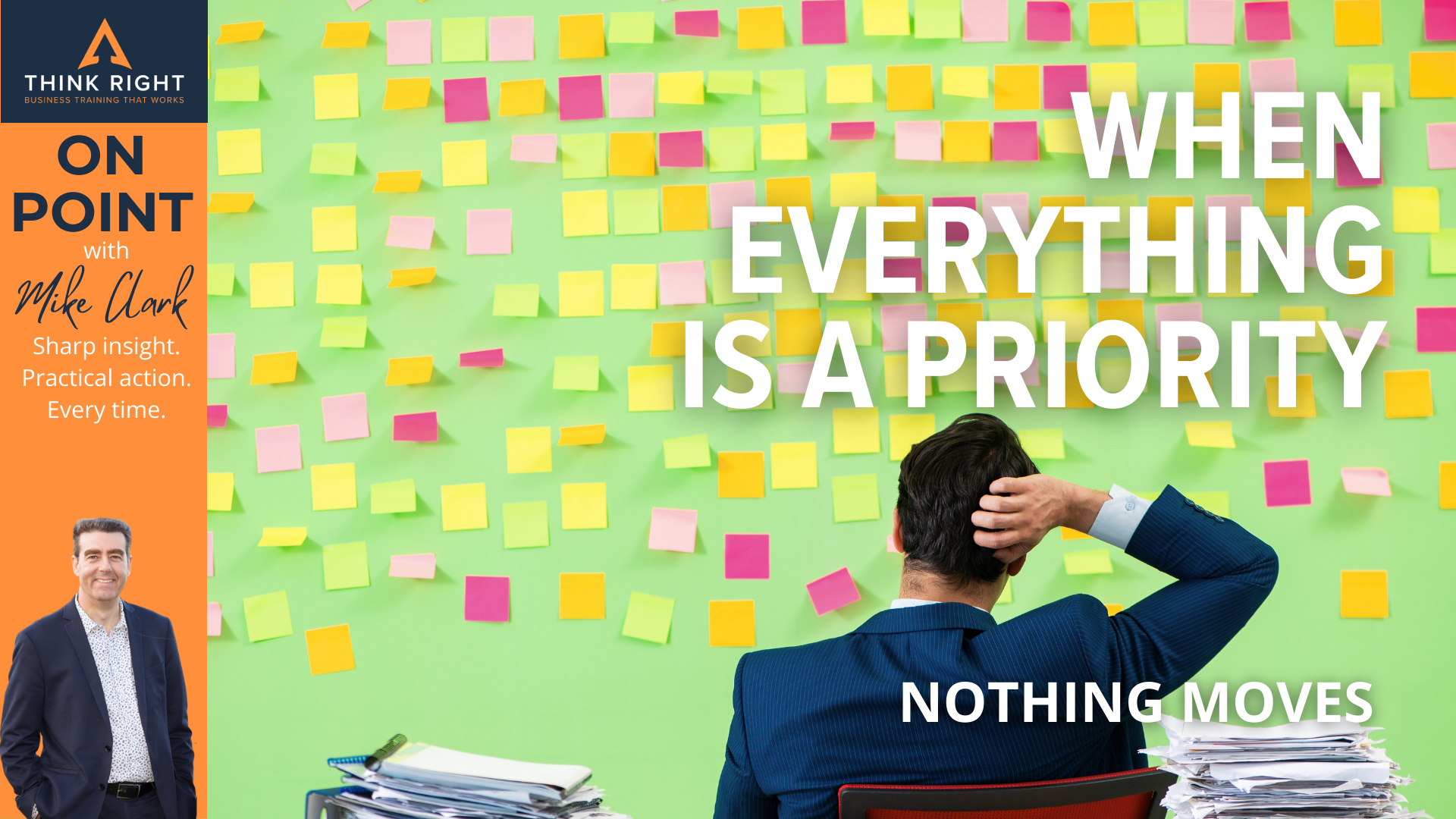
If everything feels important, it usually means nothing is clear.
I was sitting with a leadership team recently reviewing their quarterly plan. The document was thorough. The energy in the room was good. Every initiative had a strong case behind it.
Marketing needed attention. Operations needed tightening. A new opportunity had emerged. A systems upgrade was overdue. Recruitment was pressing.
Every item was valid.
That was the problem.
When everything carries equal weight, decision-making slows. Teams hesitate. Energy scatters. Work increases, but progress feels thinner.
Leaders rarely set out to create this situation. It often grows from optimism and capability. The business can see multiple paths forward, and because each one looks worthwhile, the temptation is to advance on all of them at once.
But equal weighting creates friction.
Teams feel it first. They struggle to know what matters most when deadlines clash. They default to the loudest voice or the most urgent issue. Meetings become longer because trade-offs are never explicitly named.
Stephen Covey put it simply: “The main thing is to keep the main thing the main thing.”
The difficulty is not identifying good ideas. It’s choosing which ones deserve disproportionate attention right now.
Clear priorities reduce more than workload. They reduce decision fatigue.
When leaders articulate what takes precedence - and what will wait - something shifts. People stop trying to optimise everything simultaneously. They can sequence their effort. They can make trade-offs confidently because those trade-offs are visible.
I’ve seen businesses transform momentum simply by naming the top two priorities for a quarter and deliberately sidelining the rest. Not abandoning them. Just sequencing them.
The relief across the team is immediate.
Instead of ten competing initiatives, there are two dominant ones. Conversations become shorter. Resource allocation becomes cleaner. Accountability sharpens.
Prioritisation is not about shrinking ambition.
It’s about directing it.
If everything remains urgent, teams quietly burn energy trying to honour conflicting signals. If priorities are clear, effort compounds.
This week, pause and look at your current list.
If everything is labelled important, what have you actually chosen?
And if your team had to name the top two priorities without prompting, would they match yours?